Otto von Bismarck and his time
1815 - 1898
This six-part chronicle invites you on a voyage of discovery through the 19th century. It links important stations in Otto von Bismarck's life with highlights on political upheavals, artistic works, scientific research results and technical innovations that changed the lives of many people. The selection is based on Bismarck's personal horizon of perception and experience and therefore shows mainly events from Germany, France, and the rest of Europe.
1815 - 1838
The years of childhood and education
-

Otto von Bismarck is born in Schönhausen (Elbe). He is the fourth of six children of Wilhelmine and Ferdinand von Bismarck. Three of his siblings die after a few years of life.
-

The Act of Congress is signed in Vienna and predated to June 8th. With this Act, Europe is politically reorganised at the end of the Napoleonic Wars. The French Emperor Napoleon I. suffers his last military defeat on June 18th at the Battle of Waterloo.
-

The von Bismarck family moves from Schönhausen to the Kniephof (Konarzewo) estate in Pomerania, which has been acquired from a relative. The Schönhausen estate is now taken care of by a steward.
-

At the first Wartburg Festival in Eisenach, students gather to demand a German nation state.
-

Johann Wolfgang von Goethe publishes his most extensive collection of poems under the title "West-Eastern Divan".
-

The Bundestag approves the Carlsbad Decrees, which restrict freedom of expression and tighten press censorship.
-

The philosopher Georg Wilhelm Friedrich Hegel publishes the "Elements of the Philosophy of Right".
-
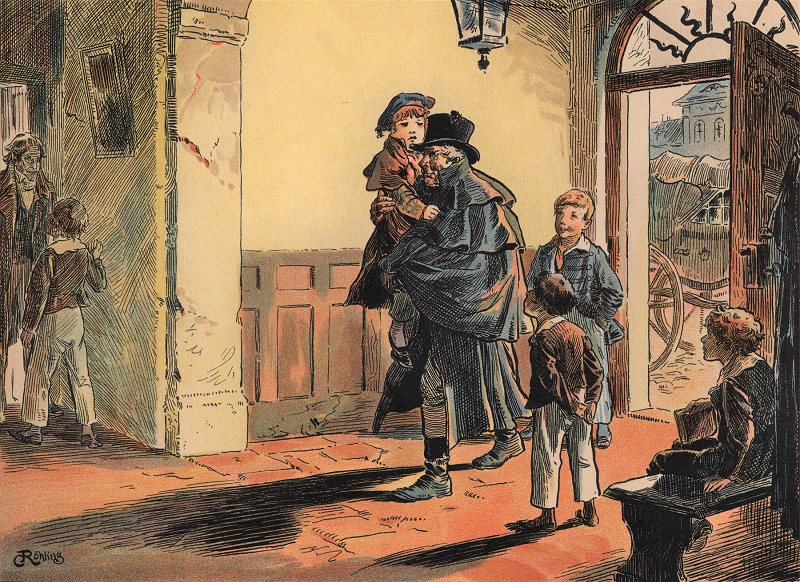
Otto von Bismarck is enrolled at the age of six in the boarding school "Plamannsche Anstalt" in Berlin. He later describes this school as a "penitentiary".
-

The first letter that has survived from Otto von Bismarck is addressed to his mother Wilhelmine Luise von Bismarck.
-
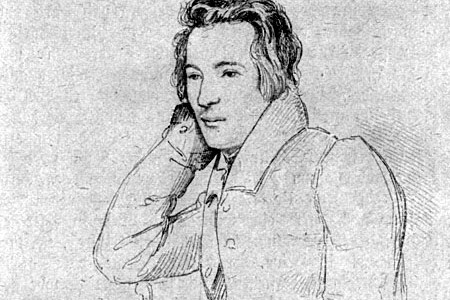
Heinrich Heine publishes "Three and Thirty Poems", of which "The Loreley" is one.
-

Gas lanterns light up in Berlin for the first time in Germany.
-
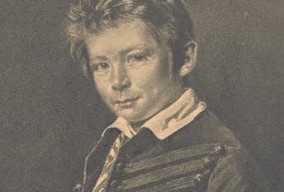
Otto von Bismarck goes to the Friedrich-Wilhelms-Gymnasium in Berlin.
-

Today's “Altes Museum” opens in Berlin. It was donated by the Prussian King Frederick William III.to display the royal art collections. The design was by Karl Friedrich Schinkel.
-

Otto von Bismarck goes to the Gymnasium zum Grauen Kloster in Berlin.
-
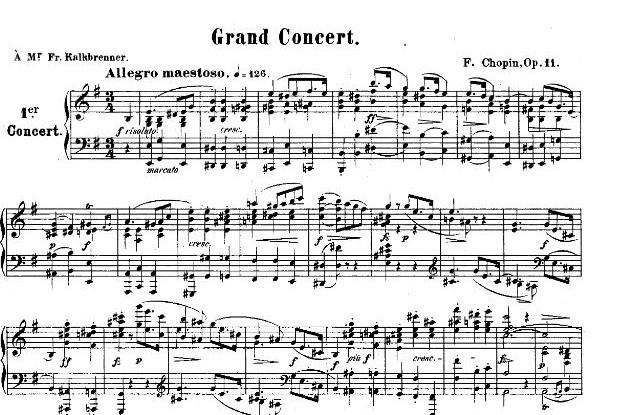
Frédéric Chopin plays the premiere of his Piano Concerto No. 1 op. 11 in E minor at the National Theater in Warsaw.
-

Victor Hugo publishes the novel "Notre Dame de Paris" (German: "The Hunchback of Notre Dame").
-

Otto von Bismarck being confirmed by Friedrich Schleiermacher confirmed.
-

Otto von Bismarck passes the Abitur in Berlin.
-

At the Hambach Festival near Neustadt an der Weinstrasse, participants demand national unity, civil liberties and popular sovereignty.
-
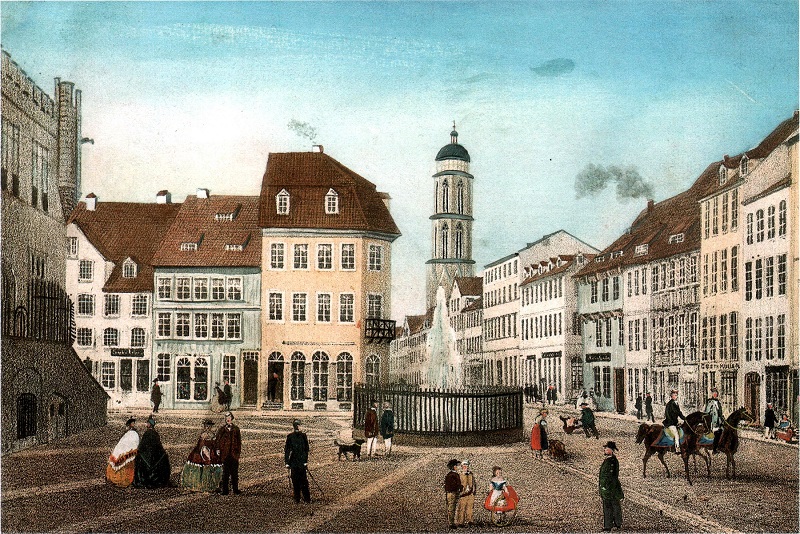
Otto von Bismarck enrols in the Faculty of Law at the Georg August University in Göttingen.
-

Otto von Bismarck joins the student fraternity Corps Hannovera in Göttingen.
-

Otto von Bismarck leaves the Georg-August-Universität Göttingen, his provisional certificate is dated September 11th, 1833. On May 10th, 1834 he enrols at the Friedrich-Wilhelms-Universität Berlin.
-

The German Customs Union comes into force. Its initial members are Prussia, Hesse, Electoral Hesse, Bavaria, Württemberg, Saxony and the individual states of Thuringia.
-

Otto von Bismarck joins the Berlin City Court as a sworn Auscultator (unpaid legal trainee) and Recorder after completing his law studies.
-

Otto von Bismarck and the later Prussian King William I meet in the winter of 1835/36. William was a childhood friend of Bismarck's mother.
-

The first steam locomotive in Germany goes into regular service between Fürth and Nuremberg.
-

Otto von Bismarck continues his legal training in Aachen as a government trainee.
-

The Arc de Triomphe is inaugurated in Paris. It had been commissioned by Emperor Napoleon I after the Battle of Austerlitz to glorify his victories in 1806.
-

Otto von Bismarck travels through Germany with Isabella Loraine-Smith and her family. The planned marriage does not take place for unknown reasons.
-

Otto von Bismarck continues his legal clerkship with the Royal Government in Potsdam.
-

Otto von Bismarck begins his military service as a one-year volunteer with the Garde-Jäger-Battalion in Potsdam. In the autumn, he transferred to the Jäger Battalion No. 2 in Greifswald and used the time he was stationed there to further his education at the Royal State and Agricultural Academy in Eldena.
-

princess Victoria is crowned Queen of the United Kingdom of Great Britain and Ireland.


1839 - 1850
Family man, Manor Lord and Member of Parliament
-

Louis Daguerre presents the photographic process named after him at the Académie des Sciences de l'Institut de France in Paris.
-

At Easter, the brothers Bernhard and Otto von Bismarck begin to jointly manage the Kniephof, Külz and Jarchlin estates previously run by their father. Otto von Bismarck's main residence becomes the Kniephof estate, which he had loved in his childhood days.
-

In the First (September 1839 to August 1842) and Second Opium Wars (1856 to 1860), Britain and France force Imperial China to open its markets.
-
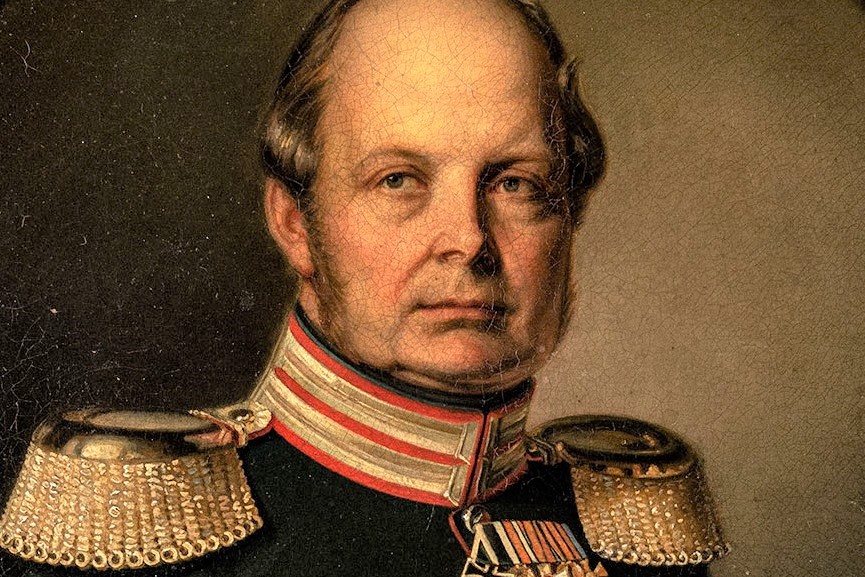
Crown Prince Friedrich Wilhelm ascends the Prussian throne as Frederick William IV. the Prussian throne.
-

Otto von Bismarck, after completing his compulsory military service, is promoted to second lieutenant of infantry in the 1st Battalion (Stargard) of the 9th Landwehr Regiment.
-

August Heinrich Hoffmann von Fallersleben writes the "Song of the Germans" on Heligoland. The island is under the jurisdiction of the British government.
-

Otto von Bismarck travels to Edinburgh, London, Paris, Bern and Lucerne, among other places, during summer and autumn.
-

Otto von Bismarck receives his first award: he is awarded the Rescue Medal for saving his riding servant from drowning in a lake during a Landwehr exercise in Lippehne (Lipiany) on June 24th, 1842. King Frederick William III had established this medal in 1833 for rescuers who had put themselves in mortal danger.
-

The opera "The Flying Dutchman" by Richard Wagner is premiered in Dresden.
-

Otto von Bismarck continues his legal clerkship in Potsdam, but finally breaks off this practical part of his legal training on May 17th.
-

From June 4th to 6th there is a weavers' uprising in Silesia.
-

Alexandre Dumas publishes his adventure novel "Le Comte de Monte-Cristo" (Engl.: The Count of Monte Christo) in instalments in the journal Le Journal des débats from August XNUMX to January XNUMX.
-

From 1845 to 1849, the potato blight causes several crop failures in Ireland; the great famine is exacerbated by the policies of the English government. The country loses a third of its population through mass death and emigration.
-

Otto von Bismarck joins the Provincial Diet of Pomerania as a member of parliament, which meets in Stettin (Szczecin).
-
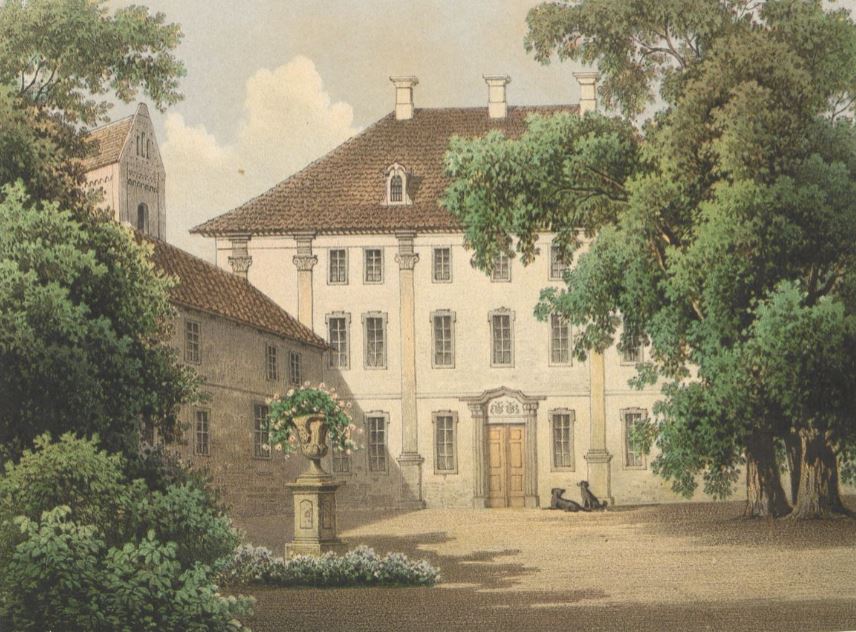
After the death of his father Ferdinand, Otto von Bismarck takes over the Schönhausen estate. He leases the Kniephof estate and later sells it.
-

A station building is built in Friedrichsruh on the new Hamburg-Berlin railway line in the style of late classicism.
-

Otto von Bismarck assumes his first public office: he is appointed dike captain in Jerichow, which lies a few kilometres south of Schönhausen, also not far from the Elbe. At the same time he is appointed deputy to the representative of the knighthood of the Jerichow district in the parliament of the Prussian province of Saxony in Merseburg.
-

The First United Diet opens in the Berlin Palace, attended by Otto von Bismarck. He is deputy to von Brauchitsch, who has been elected by the parliament of the Prussian province of Saxony but is ill. Bismarck takes his place in May and takes part in the two-month session with repeated speeches.
-

Otto von Bismarck and Johanna von Puttkamer are married in the village church of Alt Kolziglow (Kołczygłowy), which is near to the estate of the bride's parents. They then embark on an extended honeymoon.
-

The telegraph company Siemens & Halske is founded in Berlin, revolutionising communications technology with its improved telegraph.
-
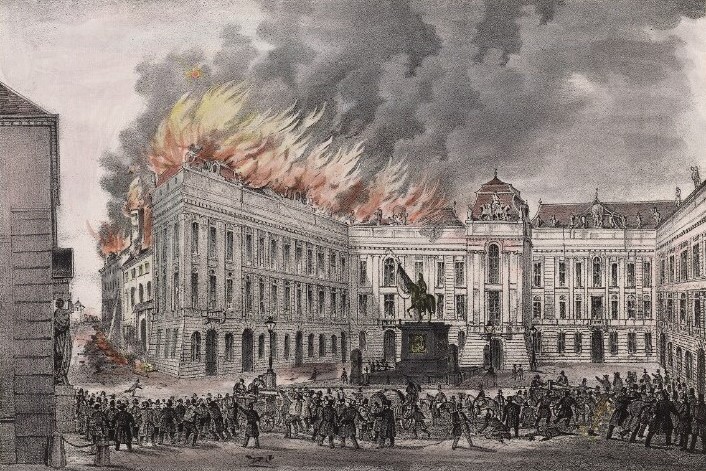
In 1848 and 1849 a wave of revolutions sweeps across Europe; in Germany, a German national parliament, a constitution and freedom of the press are being demanded.
-

The first German National Assembly meets in Frankfurt Paulskirche.
-

The first regular issue of the national, conservative Neue Preußische Zeitung ("Cross Newspaper") is published. Otto von Bismarck is one of the co-founders and writes political articles.
-

The first child of Johanna and Otto von Bismarck, their daughter Marie, is born.
-
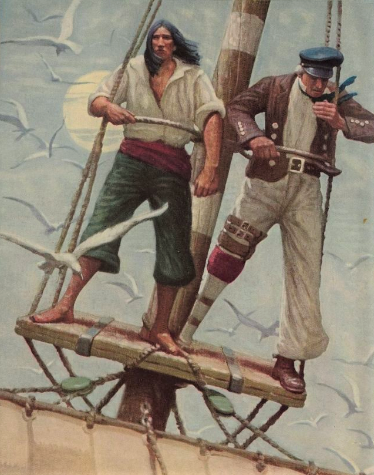
Herman Melville publishes his novel Moby-Dick; or, The Whale" in London and New York.
-

Otto von Bismarck is elected to the Second Chamber of the Prussian Parliament as a deputy for Westhavelland.
-

The second child of Johanna and Otto von Bismarck, their son Herbert, is born.
-

In Rathenow, Otto von Bismarck is elected as a member of parliament for the People's House of the Union Parliament in Erfurt.


1851 - 1862
Diplomatic years
-
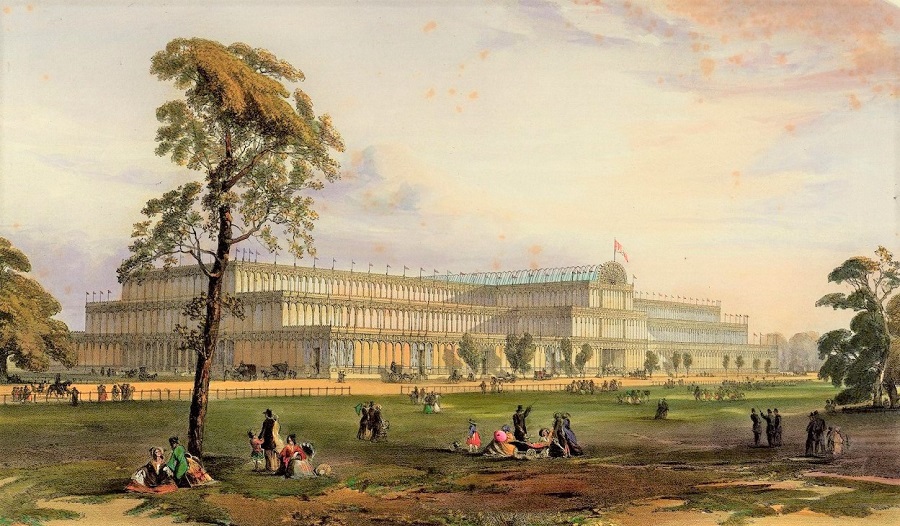
The first world exhibition opens in London. The main building is a crystal palace that impresses the public with the world's largest transparent hall made of standardised cast-iron columns, beams, and glass panels.
-

In the bloodiest civil war in human history to date (1851 - 1864), more than 20 million people lose their lives in China following the Taiping movement's uprising against the Qing dynasty.
-

Otto von Bismarck enters the diplomatic arena: he is appointed Councillor at the Prussian Legation to the German Bundestag in Frankfurt am Main as well as Privy Legation Councillor.
-

Otto von Bismarck is appointed Prussia's envoy to the German Bundestag in Frankfurt am Main.
-

The writer Ivan Turgenev publishes "Записки охотника" (A Sportsman’s Sketches). These stories contribute significantly to the discussion on the abolition of serfdom in Russia (1861).
-

Harriet Beecher Stowe publishes her novel "Uncle Tom's Cabin" about the fate of African American slaves.
-

Otto von Bismarck fights a duel against Georg von Vincke at Lake Tegel. His friend and brother-in-law Oskar von Arnim-Kroechlendorffserves as his second. The duel was triggered by a debate marked by personal insults during a chamber meeting in the Prussian Parliament on March 22nd. Both duellists missed their targets with their pistols.
The duel took place despite the fact that instigating and participating in a duel was forbidden in Prussia.
-

Wilhelm, called "Bill", is born. He is the third child of Johanna and Otto von Bismarck. His godfather is Prince Wilhelm of Prussia.
-

The Crimean War breaks out. It ends in 1856 with Russia's defeat by the Ottoman Empire, France, Great Britain and Sardinia. The Peace of Paris permanently changes the European balance of power.
-
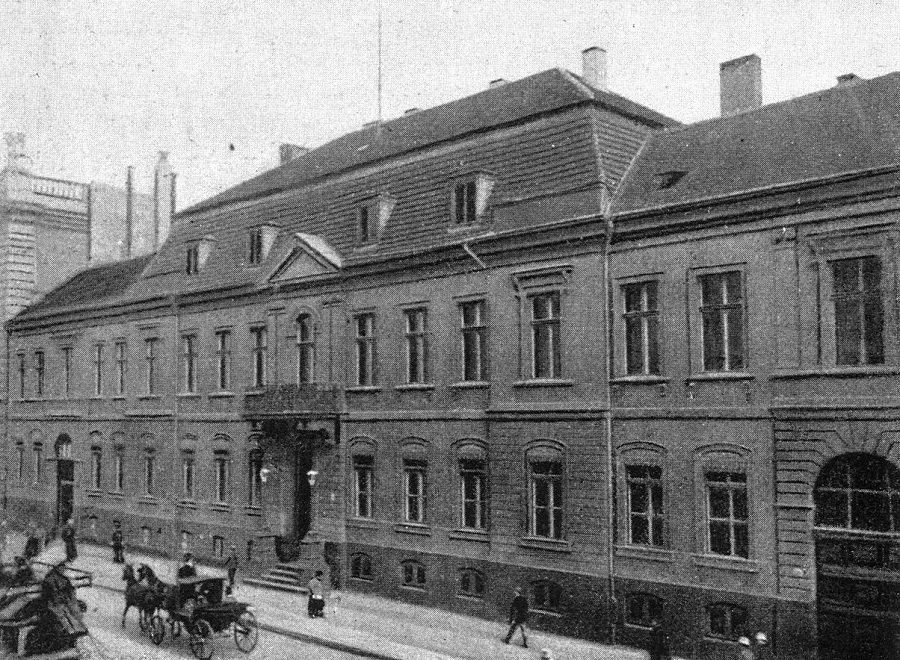
The “Association of Old and Fortified Estates in the Landscape District of the Duchy of Stettin” proposes Otto von Bismarck as a member of the Prussian House of Lords. The thus "presented" new member of the First Chamber of the Prussian Parliament is appointed personally and hereditarily to the House of Lords once again a few years later, on 22 March 1868, by the Prussian King William I – on the king’s birthday.
-
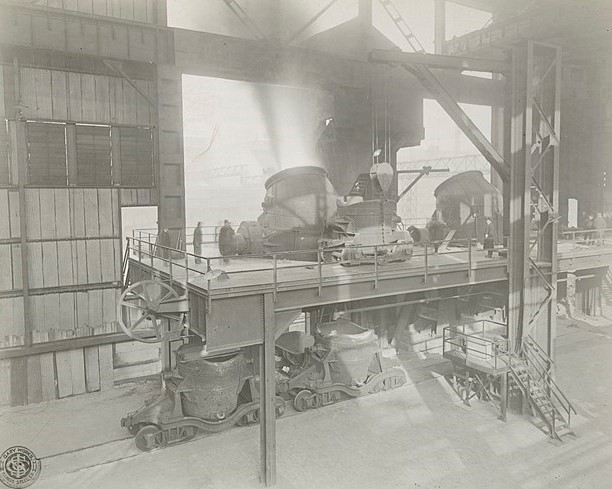
The engineer Henry Bessemer revolutionises the production of steel with the invention of the Bessemer converter, soon named after him. It can now be mass-produced, making large steel constructions possible.
-

The comic opera Orphée aux enfers (Orpheus in the Underworld), with music by Jacques Offenbach, is premiered in Paris. It is his first full-length work and a sensational success. It satirises the Greek legend of Orpheus and Eurydice and at the same time parodies the double standards of the better society in the French Empire. Emperor Napoleon III was allowed to see himself reflected in the figure of the love-struck god Jupiter.
-

An uprising against the British occupiers begins in India. After its suppression in 1859, the country formally becomes a British crown colony.
-

Prince Regent Wilhelm of Prussia appoints Otto von Bismarck as Minister Plenipotentiary and Envoy Extraordinary at the Russian Court in St. Petersburg.
-

The German National Association is founded. Its members are committed to a "lesser German" nation state.
-

“Schiller celebrations” are held throughout Germany to commemorate not only the 100th birthday of the freedom-loving poet, but also the March Revolution of 1848.
-

The English natural scientist Charles Darwin publishes "On the Origin of Species".
-

The Kingdom of Italy is founded.
-

The American Civil War begins; it ends on 23 June 1865. The North defeats the Confederate South and ends slavery nationwide.
-

The coronation of William I as King of Prussia takes place in Königsberg. Otto von Bismarck attends the ceremony as a spectator and is appointed Privy Councillor with the title of Excellency on the same day.
-

Johann Philipp Reis, a teacher of mathematics, physics and chemistry, introduces a telephone in Frankfurt am Main, which he calls the "Telephon". In 1876, two years after Reis' death, Alexander Graham Bell, also a teacher, applied for a patent for the "telephone", which he had developed on different principles.
-

Otto von Bismarck is appointed Prussian envoy in Paris.
-

The foundation stone is laid in Paris for the opera house, soon to be named Opéra Garnier after its architect Charles Garnier; Emperor Napoléon III commissioned the building.


1862 - 1870
Prussian minister-president
-

In a speech to the Budget Commission of the Prussian House of Representatives, designated minister-president Otto von Bismarck warns against an expansion of parliamentary rights: "[...] it is not by speeches and majority decisions that the great questions of the day are decided - that was the great mistake of 1848 and 1849 - but by iron and blood". At the same time, he shows the liberal MPs an olive branch as a symbol of his willingness to cooperate. The branch is a souvenir from a summer holiday in Biarritz, where he had spent time with Princess Katharina Orlowa.
-

King William I appoints Otto von Bismarck as Prussian minister-president and minister of foreign affairs.
-

The painting "Le Déjeuner sur l'herbe" (Breakfast on the Green) by the French painter Édouard Manet is initially rejected by the Paris Salon as too daring but is then shown in a separate room at the suggestion of Emperor Napoléon III.
-

The businessman Henry Dunant founds the International Committee of Relief Societies for the Care of the Wounded in Geneva with four like-minded people, which is renamed the International Committee of the Red Cross in 1876. For his life's work, Dunant was awarded the first Nobel Peace Prize in 1901 - together with the pacifist Frédéric Passy.
-

The socially critical novel "Great Expectations" by the English writer Charles Dickens is published in German translation. It tells the story of the orphan boy Pip.
-

The German-Danish War breaks out after disputes over the affiliation of the duchies of Schleswig and Holstein. It ends with the Peace of Vienna on October 30th, following a victory for Prussia and Austria.
-

Otto von Bismarck takes part in the parade in Sundewitt (Sundeved) celebrating the storming of the Dybbol fortifications. This military success contributes significantly to Denmark's defeat in the German-Danish War.
-

The chemist Louis Pasteur presents a method for preserving liquid foodstuffs at the Sorbonne University in Paris. Two days later he applies for a patent.
-
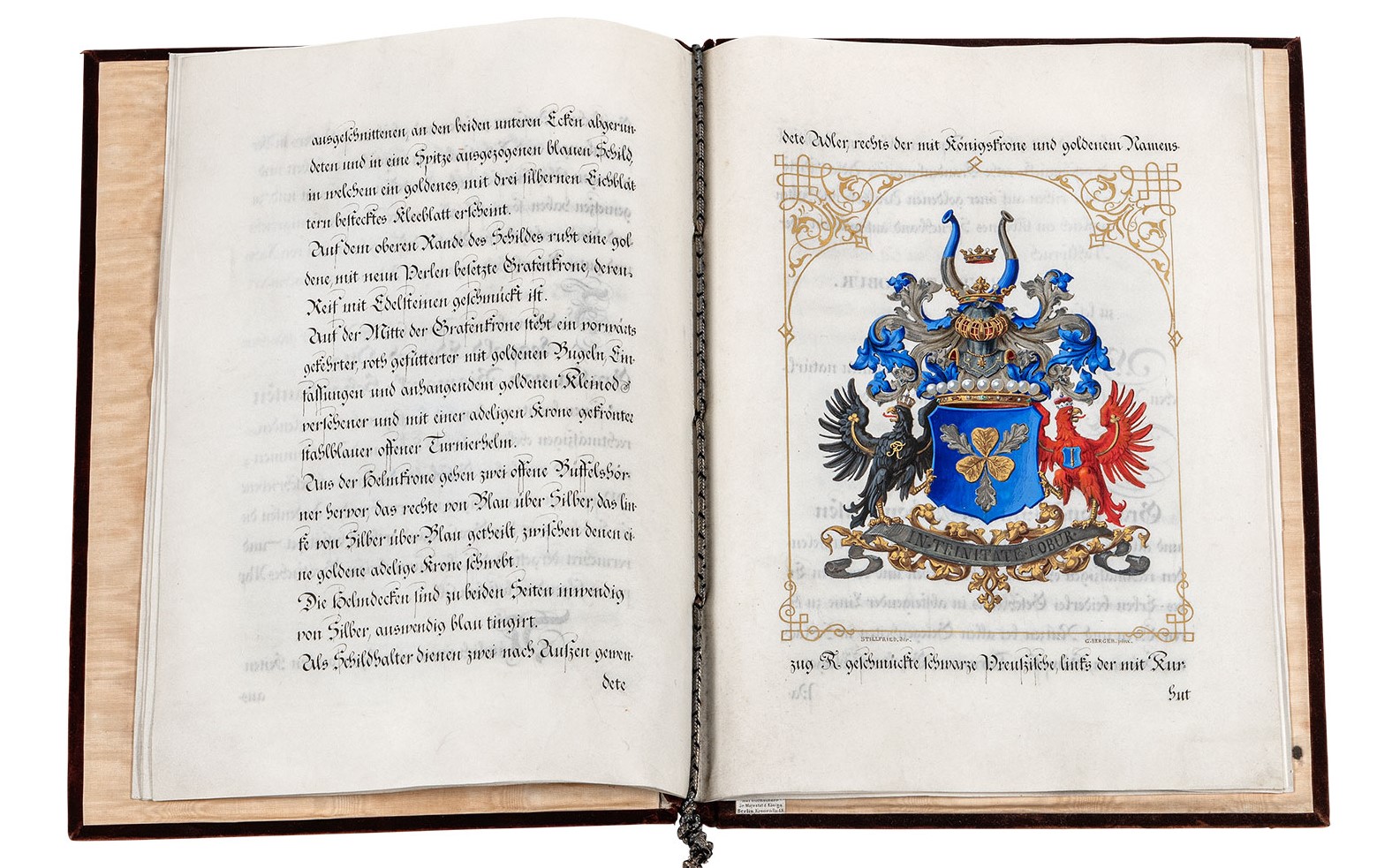
King William I of Prussia elevates Otto von Bismarck "and his descendants" to the rank of counts.
-

Louise Otto Peters and Auguste Schmidt found the General German Women's Association (ADF) in Leipzig. Central demands are the right of women to "higher education" as well as liberation of professional activity from all obstacles, i.e. equal access to the labour market.
-

The engineer Robert Whitehead, grandfather of Otto von Bismarck's daughter-in-law Marguerite, born in 1871, develops the first screw-driven torpedoes.
-

The student Ferdinand Cohen-Blind shoots the Prussian minister-president Otto von Bismarck with a revolver in order to prevent a war against Austria. Bismarck is only slightly injured.
-

The rivalry between Prussia and Austria for supremacy in the German Confederation culminates in the outbreak of the German War. It ends with Prussia's victory and the signing of the Peace of Prague on August 23rd.
-

Otto von Bismarck brings King William I to safety from "heavy shellfire" on the battlefield at Königgrätz.
-

The first permanent transatlantic telegraph cable is put into operation. Cyrus Field, president of the Atlantic Telegraph Company, had it laid between Ireland and Newfoundland.
-

Otto von Bismarck campaigns in the Prussian House of Representatives for a settlement of the army and constitutional conflict of the early 1860s. Two days later, a "law concerning the granting of indemnity in respect of the management of the state budget from 1862 onwards and the authorisation of state expenditure for the year 1866" is passed.
-

In Berlin, the New Synagogue is inaugurated in the presence of Otto von Bismarck. The design is by the architect Eduard Knoblauch. After Knoblauch's death, the interior is designed by the Prussian court architect Friedrich August Stüler.
-

The Prussian House of Representatives grants Otto von Bismarck an endowment of 400.000 thalers in recognition of his victory against Austria. He uses this money to purchase the Varzin (Warcino) estate in Upper Pomerania on 23 April 1867.
-

The foundation stone for the National Gallery is laid on Museum Island in Berlin-Mitte. The architectural design was by Friedrich August Stüler and, after his death, was further elaborated by Johann Heinrich Strack. The building is considered fireproof due to a modern iron construction and brick ceilings.
-

The Second Mexican Empire, dependent on France, ends with the execution of Emperor Maximilian by firing squad. He was a brother of Emperor Franz Joseph's of Austria. The rightful president Benito Juárez García is restored to office.
-

The constitution of the North German Confederation comes into force. The Confederation unites all German states north of the Main River under Prussian leadership.
-

Otto von Bismarck becomes Chancellor of the North German Confederation.
-

Karl Marx publishes the first volume of his work "Das Kapital" in a Hamburg publishing house. "Every judgement of scientific criticism is welcome to me," he writes at the end of the preface. "In the face of the prejudices of so-called public opinion, to which I have never made any concessions, the motto of the great Florentine [Machiavelli] still applies to me: Segui il tuo corso, e lascia dir le genti! (Go your way, and let people talk!)".
-

The chemist Alfred Nobel applies for a patent for dynamite in Sweden and later in other countries. He developed it from liquid nitroglycerine on a barge on the Elbe near Geesthacht. Dynamite is elastic and less sensitive to shocks than nitroglycerine and therefore easier to transport.
-

Otto von Bismarck is made an honorary citizen of the town of Barby; it is the first honorary citizenship to be conferred on him.
-

Otto von Bismarck is appointed hereditary member of the Prussian House of Lords.
-

The Bavarian King Louis II has the foundation stone laid for Neuschwanstein Castle. The architecture and furnishings are based on picturesque views and decorative details designed by the renowned theatre painter Christian Jank. The king will later also finance the building project with funds he receives from Otto von Bismarck after his approval of the foundation of the German Empire.
-

After ten years of construction, the Suez Canal is opened. Guests at the celebration include the French Empress Eugenie, Emperor Franz Joseph of Austria and the Prussian Crown Prince Frederick William. The planned premiere of the opera "Aida" is cancelled because the composer Guiseppe Verdi does not complete the work until two years later.
-

The French chargé d'affaires Le Sourd delivers his country's declaration of war. The Franco-Prussian War begins.
-

The morning after the victorious Battle of Sedan, Otto von Bismarck refuses Emperor Napoléon III's requested benevolent surrender at Donchéry. The Emperor is forced to abdicate and is placed under arrest at Wilhelmshöhe Palace near Kassel.
-

Prussian King William I is proclaimed German Emperor in the Hall of Mirrors at Versailles Palace.


1871 - 1890
Imperial Chancellor
-

The German Reichstag convenes for the first time in Berlin. The deputies have been elected secretly and freely on March 3rd; all men over the age of 25 are entitled to vote in the German Reich; the three-class suffrage system continues to apply to the Prussian state elections.
On March 21st,Emperor William I elevates Otto von Bismarck to the rank of Prince and appoints him Imperial Chancellor.
-

Emperor William I signs the "Law Concerning the Constitution of the German Reich"; this was significantly co-written by Otto von Bismarck.
-
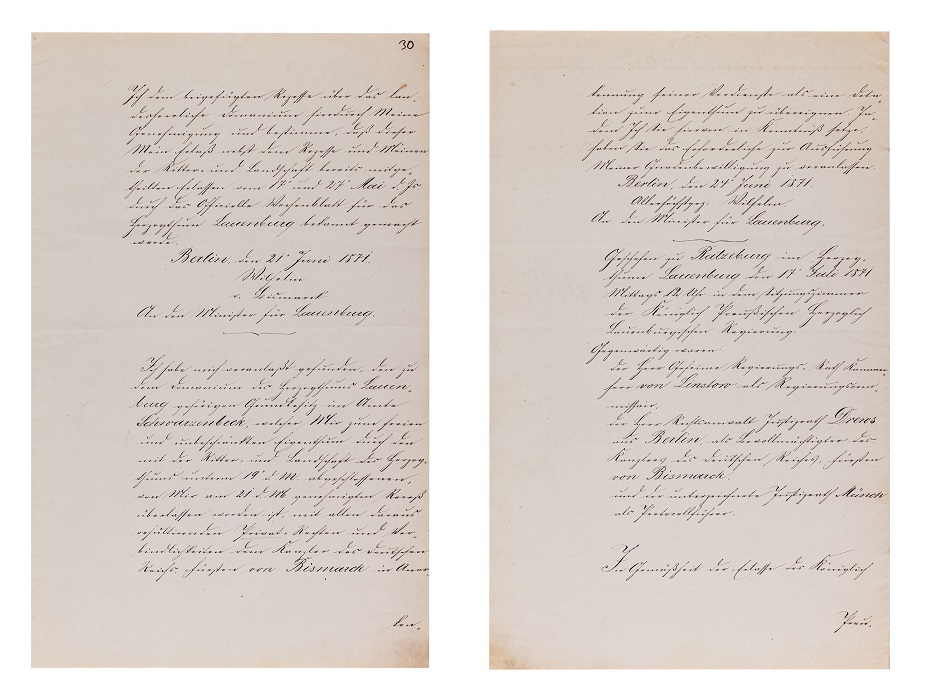
Emperor William I gives Otto von Bismarck the Fideicommissum Schwarzenbek in the Duchy of Lauenburg and with it large parts of the Sachsenwald. The "Domanium" had been divided for this purpose by a "Rezeß" of June 21st, 1871, between the Kaiser as Duke of Lauenburg and the Land of Lauenburg.
-

"Don't worry, we won't go to Canossa" - In his "Canossa" speech to the Reichstag, Otto von Bismarck refuses to give in to the Pope on the church question. In doing so, he recalls the petition and penitential journey of the Roman-German King Henry IV to Pope Gregory VII in 1077.
-

Otto von Bismarck asks to be dismissed as Prussian minister-president. He is succeeded on January 1st, 1873 by Albrecht von Roon
-

Jules Verne publishes his novel “Le Tour du monde en quatre-vingts jours” (Around the World in 80 Days).
-

The British missionary and African explorer David Livingstone dies of a severe diarrhoeal disease in what is now Zambia.
-

Albrecht von Roon resigns as Prussian minister-president, Otto von Bismarck returns to office.
-

The journeyman cooper Eduard Kullmann carries out an assassination attempt on Otto von Bismarck in the spa town of Kissingen.
-
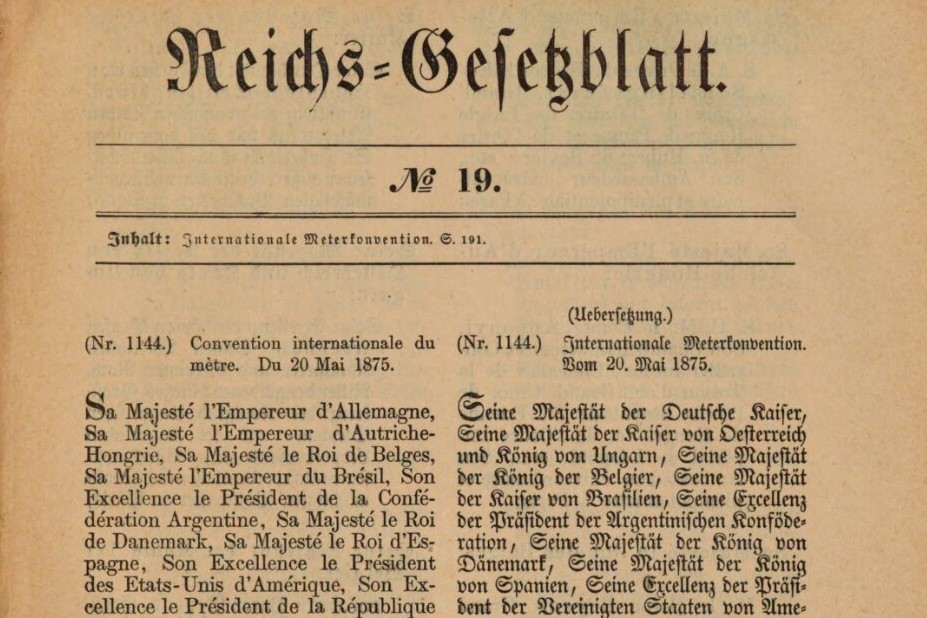
To safeguard the metric system, 17 states sign the International Metre Convention, among them Argentina, Denmark, the German Empire, France, Austria-Hungary, Russia and the USA.
-

The composer Richard Wagner opens a festival theatre in Bayreuth for recurring performances of his operas. It is designed by the architect Otto Brückwald, the most important sponsor is the Bavarian King Ludwig II.
-
Emilie Lehmus opens a practice in Berlin. She is the first female doctor in private practice in Germany and was previously the first German medical student in Zurich.
-

The ballet "Swan Lake" with music by Pyotr Tchaikovsky is premiered at the Bolshoi Theatre in Moscow. The first choreography is by Wenzel Julius Reisinger. The new production becomes more famous with the choreography by Marius Petipa and Lev Ivanov, which can be seen at the Mariinsky Theatre in St. Petersburg on February 17th / January 15th, 1895.
-

In the "Kissingen Dictation", dictated by Otto von Bismarck to his son Herbert, he sets out the main features of the foreign policy he wants to pursue.
-

Otto von Bismarck opens the Congress of Berlin, at which leading politicians of the major European powers and the Ottoman Empire negotiate the political order in the Balkans. The Treaty of Berlin is signed on July 13th, recognising, among other things, the independence of Romania, Serbia and Montenegro.
-

Otto von Bismarck gives a speech in the Reichstag on the draft law regarding the “publicly dangerous efforts of social democracy”. The so-called Socialist Law will be adopted on October 19th with the votes of the conservative and national liberal MPs.
-

The US inventor Thomas Alva Edison develops the light bulb; he applies for a patent in 1880.
-

The Saltpetre War breaks out, with Chile fighting Bolivia and Peru for five years over resource-rich territories in northern Chile.
-

The first grandchild of Otto and Johanna von Bismarck is born, the son of Marie and Kuno zu Rantzau. His name is Otto.
-
Otto von Bismarck is appointed Prussian Minister of Trade.
-

632 years after construction began, Cologne Cathedral is completed and inaugurated as the tallest building in the world at 157 metres.
-

The Mahdi uprising against Egyptian rule breaks out in the Sudan provinces. It is led by Muhammad Ahmad, who declares himself to be the Mahdi (Arabic: mahdī, "the one who is justified [by God]"). The uprising is put down in 1899 with the help of British soldiers. Sudan becomes an independent republic on January 1st, 1956.
-

At the opening of the fifth German Reichstag, Otto von Bismarck reads out William I's "Kaiserliche Sozialbotschaft" (Imperial Social Message). It presents the plan to create social legislation to protect and support industrial workers in the case of accident, illness and old age.
-
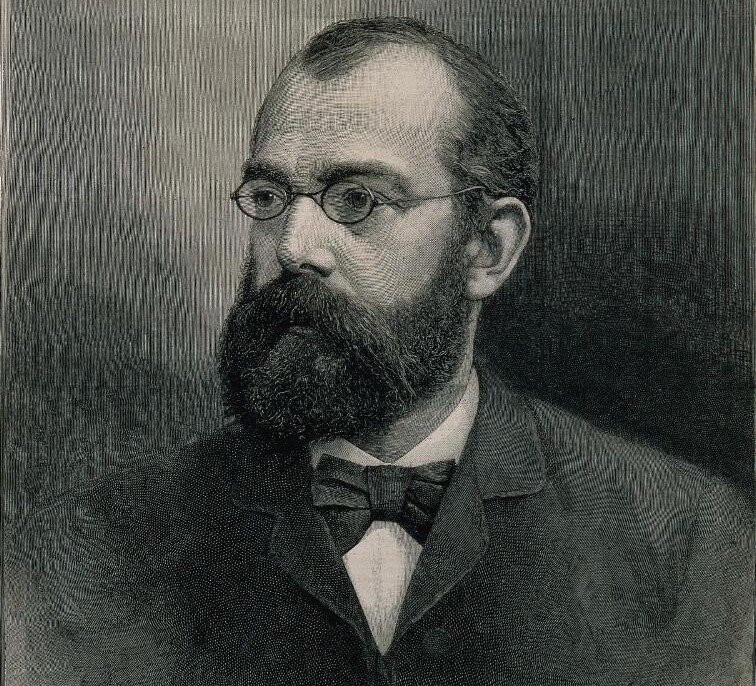
The physician and microbiologist Robert Koch reports on his discovery of the tuberculosis pathogen at a meeting of the Berlin Physiological Society.
-

The Gotthard Tunnel is opened in Switzerland; it is the longest tunnel in the world. This 15-kilometre-long railway link was planned by the engineer Louis Favre.
-

With the victory at the Battle of Tel-el-Kebir, Great Britain succeeds in defeating an Egyptian independence movement. Egypt is occupied and does not regain its independence until 1922.
-

At the instigation of Imperial Chancellor Otto von Bismarck, the Reichstag passes the Health Insurance Act, the first building block of social legislation in Germany. The health insurance funds are decentralised, their administration and insurance benefits are financed one-third by employers and two-thirds by employees.
-

In a telegram to the German consul Wilhelm Lippert , Otto von Bismarck informs the government in Cape Town that the German Empire has placed the settlements of the merchant Adolf Luderitz in South West Africa (today: Namibia) under its protection. The telegram marks the beginning of the official colonial policy of the German Reich.
-
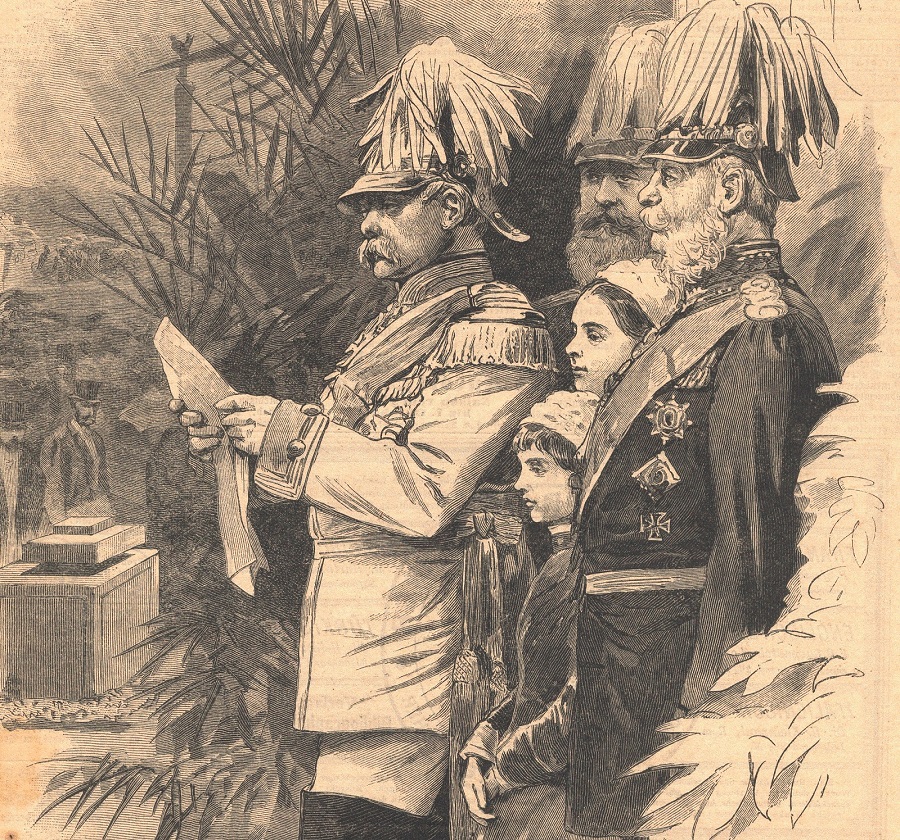
The foundation stone for the new Reichstag building is laid in Berlin. Otto von Bismarck has the honourable task of adding the document. He is accompanied by his wife Johanna, Emperor William I and his family are also present.
-

Otto von Bismarck opens the Berlin Africa Conference in the Reich Chancellor's Palace. Envoys from 14 European states (including the Ottoman Empire) and the USA discuss - in the absence of African representatives - their spheres of influence on the African continent. The conference ends on February 26th, 1885 with the signing of the Congo Act.
-
The US American Hiram Maxim develops the first self-loading machine gun. Great Britain subsequently uses it in the colonial wars.
-

Otto von Bismarck's 70th birthday is celebrated throughout Germany; he received 3738 letters of congratulations (“a further 1500 letters were not suitable for replying”), 2644 telegrams, 175 congratulatory addresses from corporations and associations, and 560 gifts. Emperor William I and his family donated a version of the painting "The Proclamation of the German Empire (January 18, 1871)" by the painter Anton von Werner specially made.
-
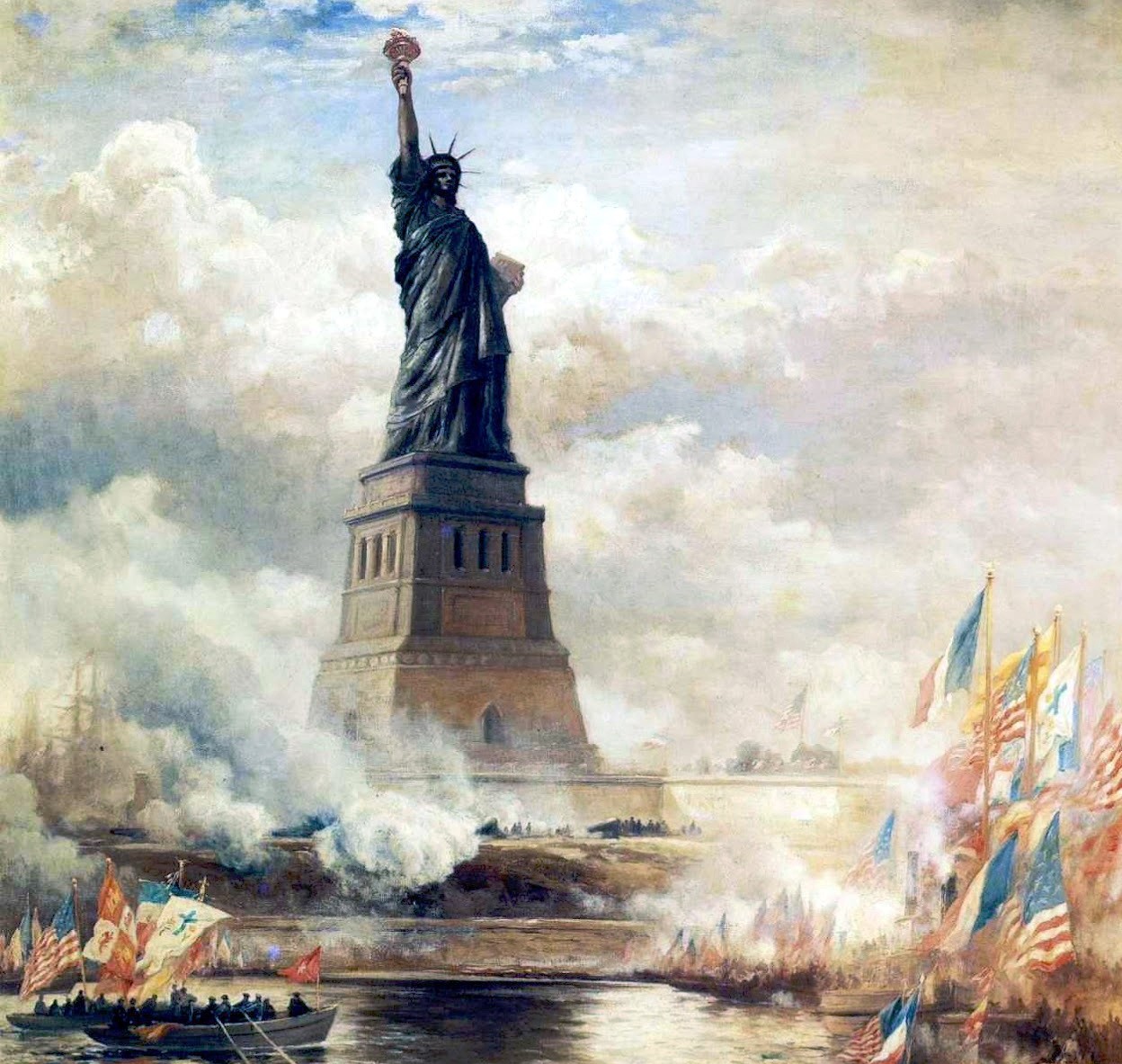
The Statue of Liberty is inaugurated in the New York harbour entrance. This gift from France was designed by Frédéric-Auguste Bartholdi.
-

Carl Benz patents his Motorwagen Nummer 1; it is the world's first practical automobile.
-

The Dutch painter Vincent van Gogh paints "Twelve Sunflowers in a Vase".
-

Emperor William I dies at the age of 91. The scene shows him in his study with Otto von Bismarck in the last year of their association. Despite a relationship of trust that lasted almost 30 years, the monarch did not always agree with the course taken by his senior minister. It was "not easy to be emperor under such a chancellor", he is said to have sighed at times.
-

Brazil is the last country in the Western Hemisphere to abolish slavery.
-

A few weeks after William I, his son Emperor Frederick III also dies. On the same day, Otto von Bismarck holds a meeting with the heir to the throne, Emperor William II , in the New Palace in Potsdam (then called Friedrichskron Palace). Political differences of opinion as well as an unconditional desire for sole rule cause the monarch to ask his Imperial Chancellor to resign after two years. Shortly after Otto von Bismarck's resignation, the Emperor sends him this large-format painting of himself to Friedrichsruh.
-

The Eiffel Tower, designed by Gustave Eiffel as a steel structure, is inaugurated in Paris.
-

Otto von Bismarck gives his last speech in the Reichstag, on the bill for invalidity and old-age insurance for workers.
-

The Social Democrat Clara Zetkin co-founded the Second International, a federation of workers' organisations, at the International Workers' Congress in Paris (July 14th-21st).
-
Otto von Bismarck is relieved of his post as head of the Prussian Ministry of Trade and Commerce.
-

The Forth Bridge is opened in Scotland over the Firth of Forth; it was designed by John Fowler and Benjamin Baker. At the time, it is the bridge with the largest span in the world.
-

After repeated requests by Emperor William II, Otto von Bismarck asks to be dismissed from all offices. William II approves the request on March 20th and subsequently confers on him the title of Duke of Lauenburg.


1890 - 1898
Chancellor without office
-

The Socialist Workers' Party of Germany (SAP) renames itself the Social Democratic Party of Germany (SPD) at its first party congress after the repeal of the Anti-Socialist Laws in Halle. It had previously become the party with the most votes in the Reichstag elections on February 20th, 1890, with around 1,4 million votes (20 percent).
-

The Norwegian writer Knut Hamsun publishes his debut novel "Hunger", based on his own experiences. Hamsun influences other novelists by his further development of the narrative technique of stream of consciousness.
-

In the Reichstag elections, Otto von Bismarck wins a seat for the constituency of Neuhaus (Oste), Hadeln, Lehe, Kehdingen, Jork (located in present-day Lower Saxony on the south bank of the Elbe); he does not exercise his mandate.
-

Otto von Bismarck travels via Berlin to Vienna for the wedding of his son Herbert von Bismarck with Marguerite von Hoyos . During his stopover in Dresden, he is celebrated by 40.000 people, 14 torchbearers and a 1600-strong choir.
-
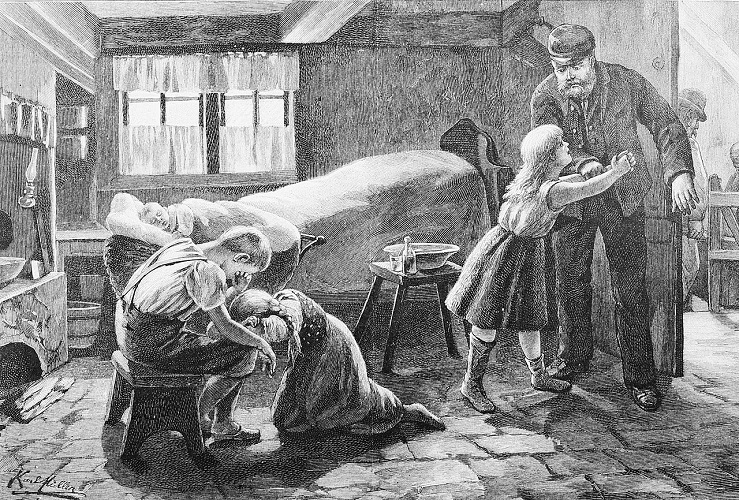
The last great cholera epidemic in Germany breaks out in Hamburg; more than 8000 people die.
-

The "law concerning the introduction of a uniform time system" comes into force; Central European Time (CET) applies throughout the German Empire.
-

In his painting "The Scream", the Norwegian painter Edvard Munch processes an anxiety attack he suffered on a walk. Through expressionist distortion, he shows a grotesque horror that is interpreted as the fear of man standing on the threshold of modernity. Munch produced a total of four versions of the painting as well as a lithograph.
-

The world premiere of the 9th Symphony in E minor op. 95 (“From the New World”) by the Czech composer Antonin Dvořák takes place in Carnegie Hall in New York. He wrote it during his three-year stay in America and was also inspired by the music of the indigenous Americans.
-

Emperor William II invites Otto von Bismarck to a "reconciliation meeting" which causes a great public stir. The Emperor's return visit to Friedrichsruh takes place on February 19th.
-

Konrad Adenauer takes the Abitur and starts studying law and political science the following month. On September 15, 1949, he becomes the first Chancellor of the Federal Republic of Germany.
-

Under the chairmanship of the Leipzig school principal Auguste Schmidt, representatives of 34 women's associations found the Federation of German Women's Associations (Bund deutscher Frauenvereine, BDF) in Berlin. It is modelled on the National Women's Council in the USA, which has existed since 1891.
-

Paul Cézanne revolutionises painting in Europe with paintings in which he depicts a motif from two different angles. In 1894 he begins the painting “Les Grandes Baigneuses” (The Great Bathers).
-

The Manhattan Life Insurance Building is completed in New York; at 106 metres, it is the tallest skyscraper in the world at the time.
-

Otto von Bismarck's wife Johanna dies in Varzin (Warcino) at the age of 69.
-

Auguste and Louis Lumière demonstrate the cinematograph at a non-public event at the Société d'encouragement pour l'industrie nationale. The apparatus is both a film camera and a film projector. The Lumière brothers show the film "La Sortie de l'Usine Lumière à Lyon" (Workers leave the Lumière works in Lyon).
-

The 80th birthday of the first Imperial Chancellor is celebrated ritualistically by his supporters throughout Germany; some 450.000 congratulatory letters arrive at his residence in Friedrichsruh.
-

The Kaiser Wilhelm Canal (since 1948: Kiel Canal) is opened.
-

The first Olympic Games of modern times are opened in Athens. Women are not yet allowed to take part in the competitions. It is not until the Olympic Games in Paris in 1900 that female athletes are admitted in the sports of golf and tennis.
-

The Chinese general Li Hongzhang visits Otto von Bismarck for an exchange of ideas in Friedrichsruh.
-

The German Civil Code (BGB) is passed by the Reichstag and comes into force on January 1, 1900. It regulates general private law in the German Empire.
-

The aviation pioneer Otto Lilienthal dies in Berlin one day after crashing his flying machine on the Gollenberg (Havelland).
-

Thomas Mann begins work on "Buddenbrooks: Verfall einer Familie" (Buddenbrooks: The Decline of a Family); the novel is published in 1901. The writer is awarded the Nobel Prize for Literature for this work in 1929.
-

King Chulalong Korn, Rama V. of Siam, accompanied by three princes, visits Otto von Bismarck in Friedrichsruh.
-

The first son of Marguerite and Herbert von Bismarck, Otto, is born. The grandfather is his godfather.
-

German troops occupy the Chinese city of Tsingtau (Qingdao), which becomes the capital of the German colony of Kiautschou in 1898.
-

Otto von Bismarck dies in Friedrichsruh at the age of 83.
-

After the radioactive element "polonium", Marie and Pierre Curie discover the even more radioactive "radium". For their work on radiation phenomena, they receive the Nobel Prize in Physics in 1903, together with Henri-Antoine Becquerel. Marie Curie also receives the Nobel Prize for Chemistry in 1911.
-

Otto and Johanna von Bismarck are laid to rest in Friedrichsruh in the family's new mausoleum.