

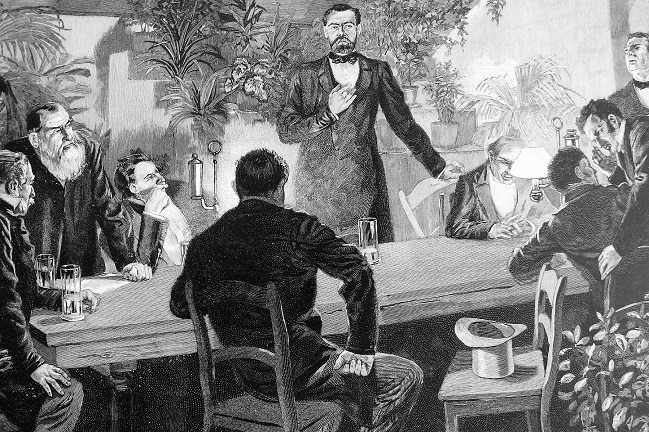
The path into politics
1847 - 1850
At the age of 31, Bismarck began a career as a member of parliament in turbulent times. He positioned himself as a champion of conservative-royalist interests and rejected the demands of the revolutionaries of 1848. In his first important speech he emphasised Prussia's claim to power.
read more
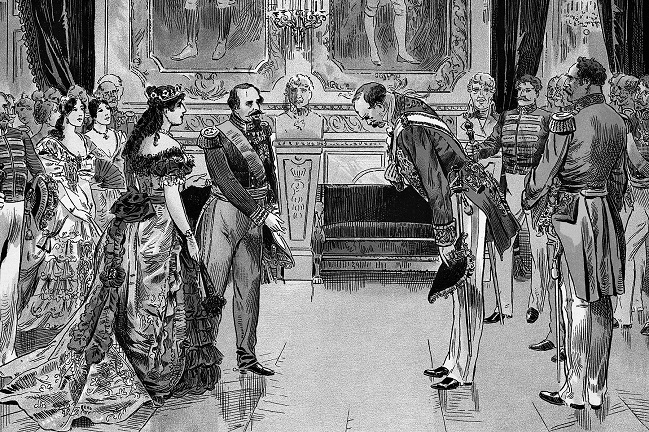
Diplomatic years
1851 - 1861
Bismarck's political career developed slowly. His first post took him to Frankfurt am Main, where he represented Prussia at the German Confederation. Only after further posts as a diplomat in St. Petersburg and Paris did he receive the long-awaited call to Berlin and became Prussian minister-president.
read more
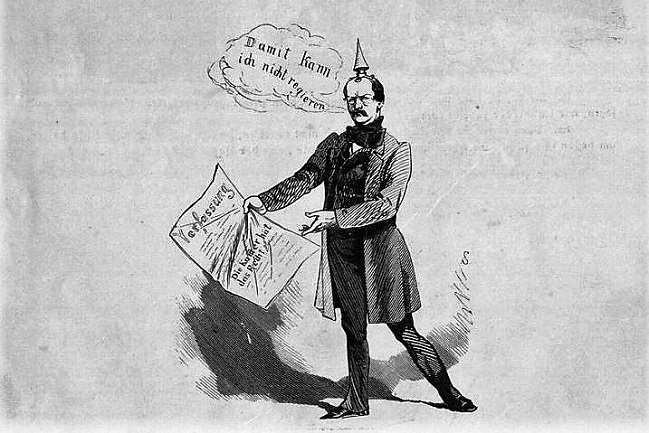
Bismarck as minister-president
1862 - 1871
When King William I appointed Bismarck minister-president, he hoped that he would be able to resolve the constitutional conflict in the interests of the Crown. However, since no agreement was reached, Bismarck ruled without parliamentary approval. It was not until 1866 that the constitutional conflict was resolved with a compromise.
read more
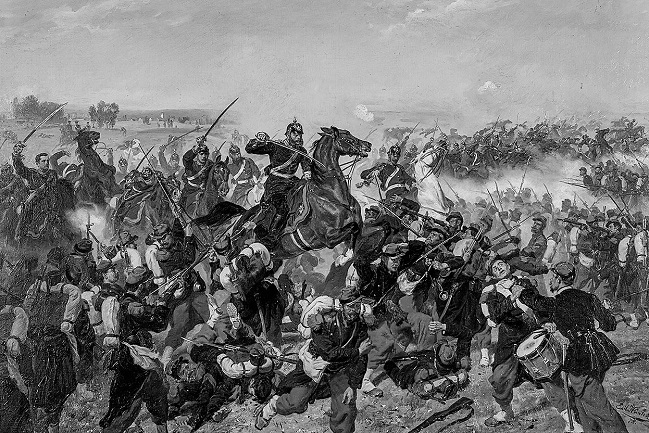
The “Wars of Unification”
1864 - 1871
The main goal of Bismarck’s policies was to secure a predominant position for Prussia. The establishment of a Lesser German nation state only gained importance for him in the late 1860s. The path to this goal led through three wars that significantly changed the political landscape of Europe.
read more
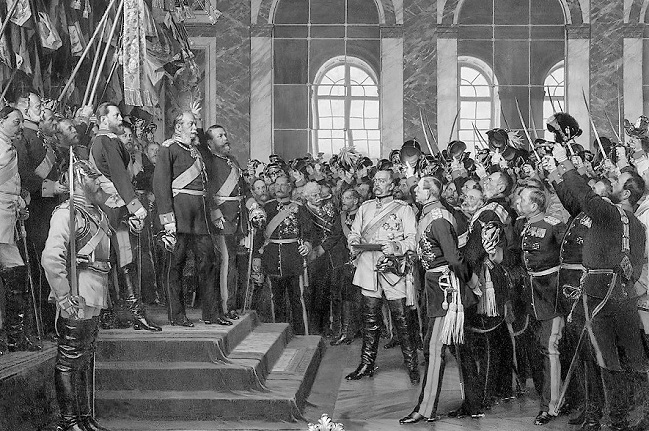
The Road to German Unity
1867 - 1871
After the Austro-Prussian War of 1866, the core of a German nation state emerged in the form of the North German Confederation. By joining forces with the southern German states, it was expanded in 1871 to form the German Empire, whose constitution was designed as a federal confederation of princes.
read more
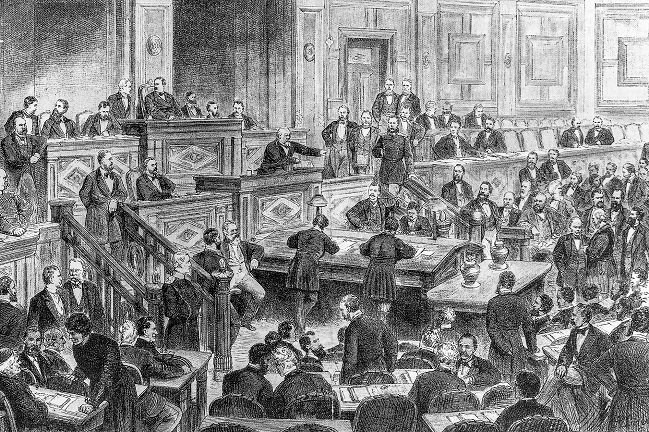
Cooperation with the Liberals
1871 - 1878
The princes founded the German Reich as a monarchist federal state; they also exercised supreme state power. But the liberal politicians hoped that unity would be followed by more civil liberties. They therefore cooperated with Bismarck in the Reichstag to push through modernisation.
read more
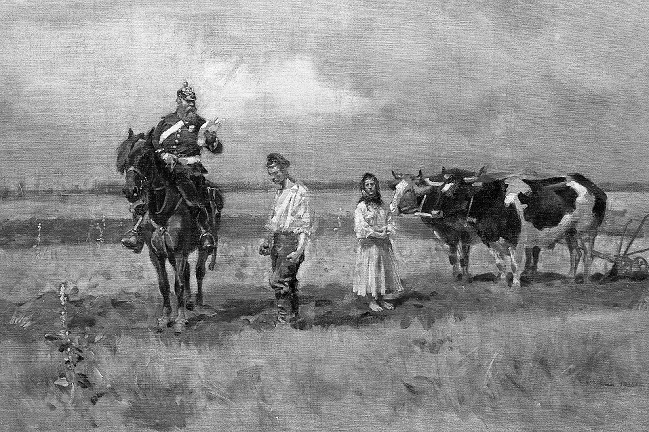
The fight against the "enemies of the Reich"
1871 - 1890
There were parts of the population that were not unanimously behind the founding of the Reich: the Social Democrats, the Catholics organised in the Centre Party, and the ethnic minorities. Bismarck accused them of wanting to harm the Emperor and the Empire and therefore subjected them to repression.
read more
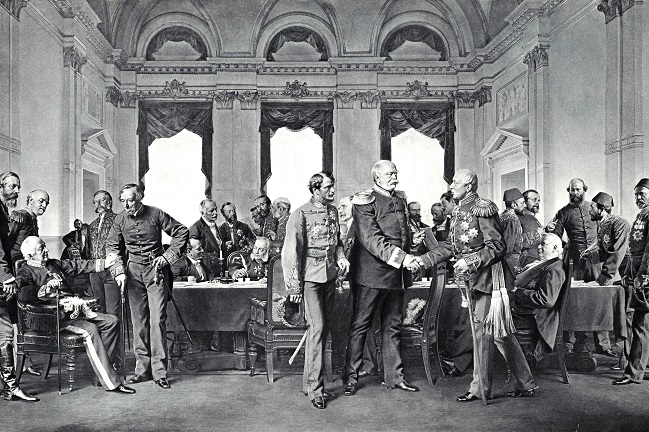
Foreign and Alliance Policy
1871 - 1890
Bismarck's foreign policy was not guided by "feelings" but by the state's "interests". His greatest concern was to secure the long-term existence of the German Empire. He therefore created a system of alliances to secure peace among the major powers in Europe.
read more
Global and Colonial Policy
1862 - 1890
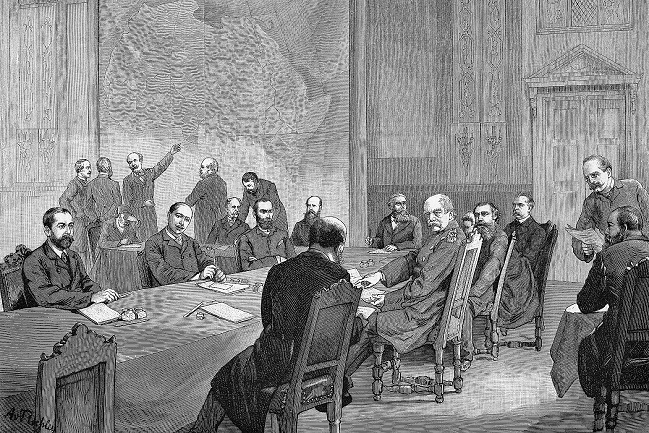
The five major European powers were the focus of Bismarck's foreign policy. But he was also keen to reach an understanding with the USA, China and Japan. He briefly promoted the formation of a German colonial empire and, as host of the Africa Conference in Berlin, approved the colonial division of Africa.
read more
Bismarck's social legislation
1881 - 1890
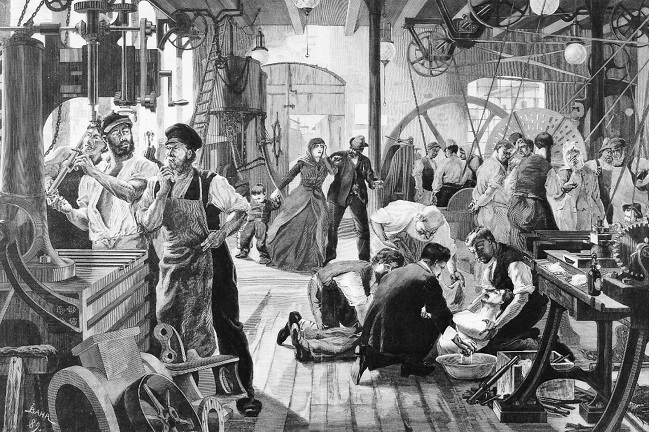
Industrialisation increased the number of workers, many of whom lived in great material hardship. Bismarck therefore established a system of social insurance that was exemplary throughout Europe. He hoped to win the workers over to the monarchy.
read more
"Chancellor without office"
1890 - 1898
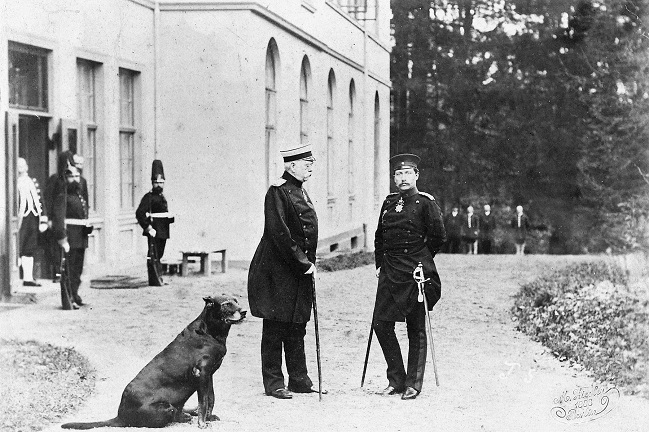
Bismarck's dismissal from all offices was initially greeted with dismay and concern at home and abroad, but then also with relief. He retired to Friedrichsruh, criticised the Emperor and the government and was increasingly elevated to the status of cult figure by his admirers.
read more
Death threats and assassination attempts
1863 - 1890
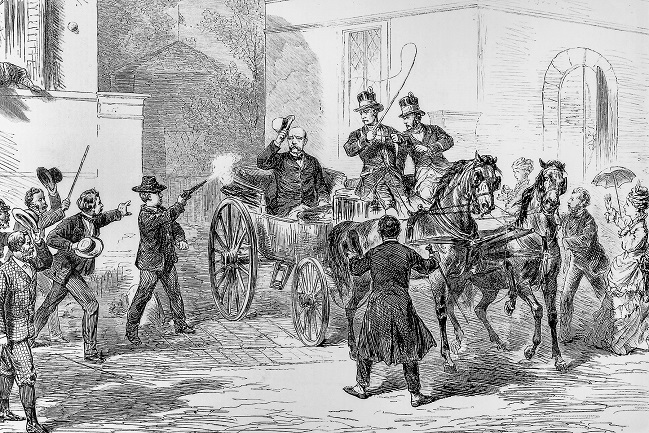
Since his appointment as Prussian minister-president, Bismarck was verbally attacked and threatened with death for political reasons. In 1866 the student Ferdinand Cohen-Blind shot him, as did the journeyman Eduard Kullmannin XNUMX. Bismarck was lucky to survive both assassination attempts with only minor injuries.
read more