Bismarck as minister-president
1862 – 1871
"The last bolt of reaction"?
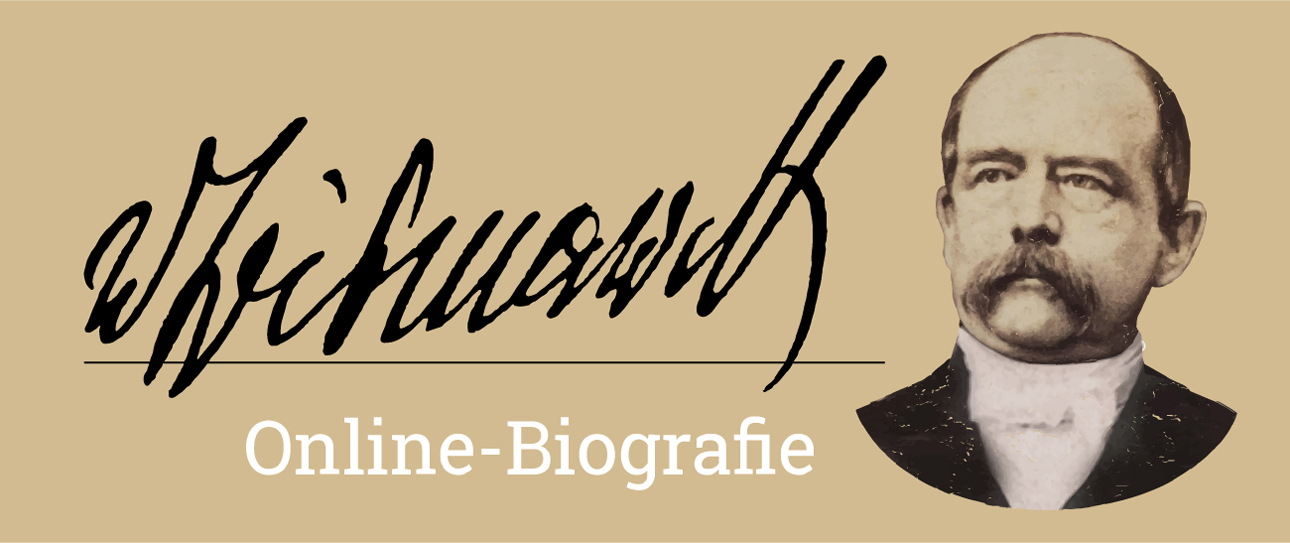
 Otto von Bismarck, around 1862 (© Otto von Bismarck Foundation)
On 23 September 1862, Bismarck assumed the office of Prussian Minister-President. At first he only represented Karl Anton, Prince of Hohenzollern-Sigmaringen, who was ill, as "Chairman of the State Ministry". On 8 October he then became President of the State Ministry and Foreign Minister. "Poor Mama, how bitterly this appointment of her mortal enemy will hurt her," noted Crown Prince Frederick William in his diary.
Whether Prussia's new head of government would succeed in pushing through the army reform was more than questionable. Fierce resistance formed in the House of Representatives, especially against the centrepiece of the reform: the Landwehr - the symbol of the "people in arms" - was to be reduced. Only a few MPs wanted to support Bismarck without compromise. "With the use of this man," wrote the publicist Ludwig von Rochau, "the sharpest and last bolt of reactionism by God's grace is spent. Even if he may have learned and unlearned a few things, he is by no means a fully-fledged statesman, but only an adventurer of the most common cut, who is only concerned about the next day."
"Iron and Blood"
Rochau was to be very much mistaken. The new minister-president remained in office for 28 years, although he seemed to live up to his bad image after only a few days. "It is not on Prussia's liberalism," Bismarck asserted before the Budget Commission of the House of Representatives at the end of September 1862, "that Germany looks, but on its power; [...] it is not by speeches and majority decisions that the great questions of the day are decided - that was the great mistake of 1848 and 1849 - but by iron and blood."
It outraged even well-meaning contemporaries that the head of government openly set the power of the state against the law. "You know how passionately I love Prussia," wrote the historian Heinrich von Treitschke. "But when I hear such a shallow Junker as this Bismarck boast of the 'iron and blood' with which he intends to subjugate Germany, the meanness seems to me to be surpassed only by the ridiculousness."
 Session of the Reichstag of the North German Confederation, which met in the manor house of the Prussian Landtag, published in: Parlamenttagebuch, 1867 (Reproduction © Otto-von-Bismarck-Stiftung)
Governing without a parliamentary basis
Since Bismarck did not succeed in reaching an agreement with the House of Representatives, he ruled without a parliamentary basis from the beginning of 1863. He invoked the "gap theory". The Prussian constitution, he argued, contained no statements on how to proceed in the event of an insurmountable conflict between the authoritative powers, the Crown and the two houses of the Landtag. "Whoever has power in his hands then proceeds in his own way, because state life cannot stand still even for a moment."
On the political level, Bismarck thus wanted to push through his course against all odds. In the economic sphere, on the other hand, he was quite prepared to accommodate his liberal opponents. On 1 July 1865, a free trade treaty with France came into force, through which Prussia was connected to the Western European trading system. As much as the liberals welcomed the opening of trade policy, they were not satisfied with it. Even Prussia's foreign policy successes, such as winning the duchies of Schleswig and Holstein in the war against Denmark in 1864 or the military victory over Austria in 1866, were not enough for them. The liberals demanded that Bismarck admit to having ruled unconstitutionally since 1862. But Prussia's prime minister was not prepared to do this. He at least considered having the budgetary expenditures subsequently approved by the Landtag, the State Diet of Prussia. William I , in turn, rejected this as an "admission of wrongdoing".
 I can't govern with that, cartoon on the constitutional conflict, published in: Kladderadatsch No. 57 of December 14, 1862 (public domain)
Building bridges to the Liberals
Unlike his king as well as his conservative supporters, however, Bismarck realised that he could not keep the constitutional conflict permanently ablaze. For the Hohenzollern monarchy would only hold its own if it accommodated the rising forces of the middle classes and the liberal national movement. At the end of difficult consultations with the king and fierce disputes in the state parliament, the prime minister succeeded in pushing through a compromise at the beginning of September 1866. The majority of the deputies accepted an Indemnity Act, which retroactively approved the Prussian state budgets since 1862. In return, Bismarck admitted to having broken the Prussian constitution. He also promised to respect the budgetary rights of parliament in the future.
The fact that the two major political movements - the Progress Party and the Conservatives - broke up in the dispute over this compromise was quite convenient for Bismarck. A new National Liberal Party was formed, which was to serve as his parliamentary basis for important political events in the future: the founding of the North German Confederation in 1867, the conclusion of a new customs union agreement with the southern German states in 1868 and also the founding of the German Empire in 1871.